NOUN Partners with Commonwealth of Learning to Develop Micro-Credentials
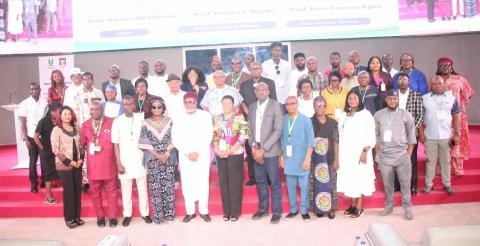
Workshop Launches New Micro-Credentials Initiative
The National Open University of Nigeria (NOUN) has partnered with the Commonwealth of Learning (COL) to establish a pioneering framework for micro-credentials aimed at enhancing employability and supporting lifelong learning in Nigeria's evolving digital economy. The initiative was launched during a four-day workshop that commenced on Monday, October 5, 2026, and will conclude on October 8, 2026, in Abuja.
This workshop is part of COL's broader project to assist member nations in creating credible, flexible, and quality-assured micro-credential ecosystems. It has attracted a diverse group of participants, including NOUN's senior management, experienced academics, professional staff, officials from the National Universities Commission (NUC), COL experts, and other key stakeholders, all working to develop NOUN's micro-credentials policy and initiate pilot courses.
During the opening ceremony, NOUN's Vice-Chancellor, Professor Uduma Oji Uduma, represented by the Deputy Vice-Chancellor for Academic Affairs, Professor Chiedu Mafiana, described the initiative as a significant milestone for the university. "Today we’re not simply opening another workshop. We are taking an important step towards shaping the future of flexible, lifelong, and technology-enabled learning in the National Open University of Nigeria," he stated.
Professor Uduma emphasized that micro-credentials present NOUN with a unique opportunity to broaden access to education, quickly address emerging skills gaps, enhance graduate employability, and promote lifelong learning. He stressed the importance of establishing a robust, credible, flexible, scalable, and sustainable micro-credential system.
On behalf of COL, Professor Jane-Frances Agbu, Adviser for Higher Education, noted that the Abuja workshop represents the first phase of COL's collaboration with NOUN, with subsequent phases aimed at developing innovative micro-credential courses. She explained that NOUN's initiative aligns with COL's Commonwealth agenda, which includes regional consultations, national policy development, and institutional pilots to ensure coherence between policy and practice.
"The value of micro-credentials rests not simply on their short duration or flexibility. The credibility of micro-credentials depends on a well-articulated policy guideline," Professor Agbu emphasized. She highlighted the urgency of micro-credentials in an era defined by artificial intelligence, digital transformation, and changing employment patterns, asserting that continuous learning has become essential for relevance in today's job market.
Dr. Fumilayo Morebise, representing NUC Executive Secretary Professor Abdullahi Yusuf Ribadu, reaffirmed the Commission's commitment to supporting Nigeria's national micro-credential agenda. "The micro-credential has been a major burning issue. And NUC, as a responsive commission, we don’t want Nigeria to lag behind," she stated. She added that the national framework and emerging guidelines provide a solid foundation for institutional implementation, with NOUN serving as one of the pilot institutions. Insights gained from NOUN's experience will help refine national guidelines for broader application.
The workshop also assessed NOUN's institutional readiness, identifying opportunities and gaps in various areas such as policy and governance, quality assurance, staff capacity, digital credentialing, industry recognition, recognition of prior learning, credit transfer, assessment integrity, and technical infrastructure.
By the end of the workshop, participants aim to equip NOUN with a resilient, future-proof institutional micro-credential ecosystem that empowers learners, meets employer needs, and accelerates national human-capital development, while also contributing to the Commonwealth's mission for reliable and transformative micro-credential offerings.