NOUN and TETFund Launch ICDL Workshop for Digital Literacy
The National Open University of Nigeria (NOUN), in collaboration with the Tertiary Education Trust Fund (TETFund) and E-TECH Solutions, has intensified efforts to promote digital literacy and workforce development through an International Certification of Digital Literacy (ICDL) Train-the-Trainer workshop.
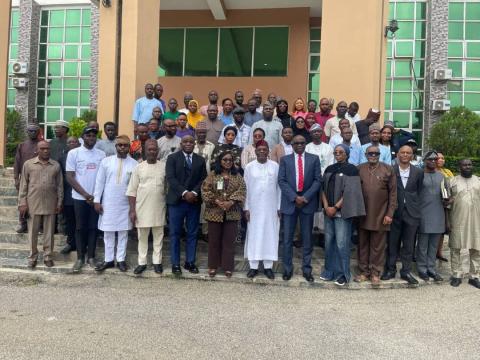
The workshop, held at the NOUN headquarters in Abuja, gathered participants from various institutions across the North-Central region, aiming to develop a pool of certified trainers who can impart digital competencies to staff and students in their respective institutions.
The Vice-Chancellor, Prof. Uduma Oji Uduma, represented by the Deputy Vice-Chancellor for Technology, Innovation and Research (TIR), Prof. Christian Ofulue, welcomed the participants and described the initiative as timely. He emphasized that digital competence has become essential for education, employment, entrepreneurship, and everyday life.
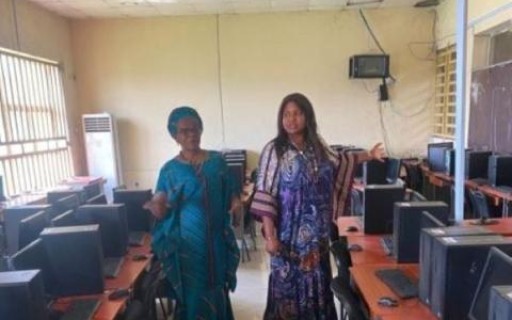
Prof. Ofulue commended TETFund for its ongoing support for NOUN, particularly in enhancing the university's digital infrastructure. He revealed that approximately 86 of the university's 130 study centres now have access to fibre-optic connectivity and solar-powered infrastructure, which is part of NOUN's broader efforts to expand access to technology-enabled learning.
Arc. Sonny Echono, the Executive Secretary of TETFund, stated that Nigeria must shift its focus from merely investing in physical infrastructure to emphasizing digital capacity development. He highlighted the importance of preparing the country's youthful population for the rapidly changing global economy.
Echono encouraged participants to view themselves as "human infrastructure," stressing that the success of the program would depend not only on the knowledge acquired during the workshop but also on how effectively they transfer and multiply these skills within their institutions. He urged beneficiary institutions to take ownership of the initiative by integrating digital training, certification, and measurable outcomes into their operations.
According to Echono, the program aims to equip participants with globally relevant digital competencies that can enhance their effectiveness in an increasingly technology-driven world. He further emphasized the need to translate the knowledge gained into practical institutional impact, urging participants to "learn, transfer, and multiply" the competencies acquired from the training.
Speaking at the event, the Chairman of E-TECH Solutions, A. U. Mustapha (SAN), highlighted the necessity of increased investment in digital skills and technology-driven education to ensure that Nigerians remain competitive in the emerging global economy. Mustapha, who referred to his participation in the workshop as a "homecoming," recalled his previous service on the NOUN Governing Council and his longstanding connection with the institution through its staff and alumni.
He noted that technology is transforming virtually every aspect of human life, making digital competence increasingly indispensable for individuals and institutions. "Technology will change everything about our lives, and it is already happening," he stated, urging participants to overcome resistance to change and embrace technological advancement.
Mustapha emphasized that access to technology and information is creating opportunities for people worldwide to compete more effectively, asserting that capacity building is critical for enabling Nigerians to participate in the global knowledge economy. "This capacity building is about giving enablement to everybody to be able to compete today and tomorrow," he remarked.
The speakers collectively underscored the importance of sustained knowledge transfer, institutional ownership, and the practical application of digital competencies in achieving the objectives of the initiative. The workshop is expected to contribute to developing a digitally skilled workforce while strengthening the capacity of participating institutions to prepare staff and students for the demands of an increasingly technology-driven global economy.